

Safety is one of the key challenges in the development of the hydrogen economy. For this reason, the European project HYDRA is working on the development and validation of innovative tools capable of detecting hydrogen leaks quickly and reliably in real-world environments.
As part of Work Package 3 (WP3), AUTOMA is developing an advanced hydrogen leak monitoring system, while Politecnico di Torino (POLITO) has provided expertise and testing facilities to evaluate the technology under controlled yet realistic conditions.
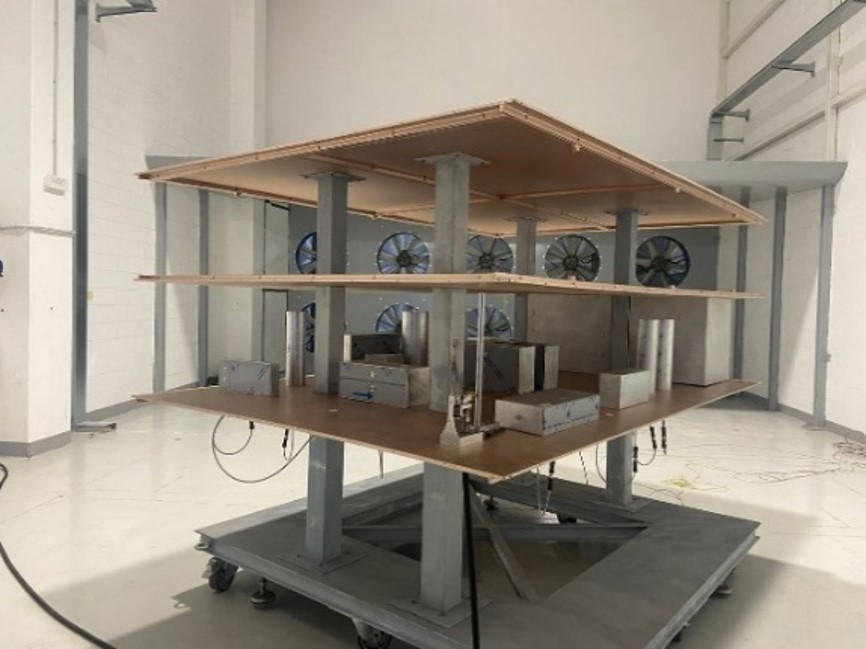
Mock-up for hydrogen releases in the wind tunnel
A “Hydrogen Tunnel” to Simulate Real-Life Scenarios
The experimental activities were carried out at the SEASTAR Wind Tunnel Laboratory in Turin, Italy, a facility specialized in gas dispersion and industrial safety studies.
The laboratory makes it possible to reproduce different situations that may occur in real life, allowing researchers to observe how hydrogen behaves in the presence of wind, obstacles and confined spaces. The facility was recently upgraded for safe hydrogen testing with the addition of ATEX-certified equipment, dedicated ventilation systems and gas detection technologies.
The monitoring system developed by AUTOMA was installed inside the wind tunnel to assess its ability to detect hydrogen under different operating conditions.
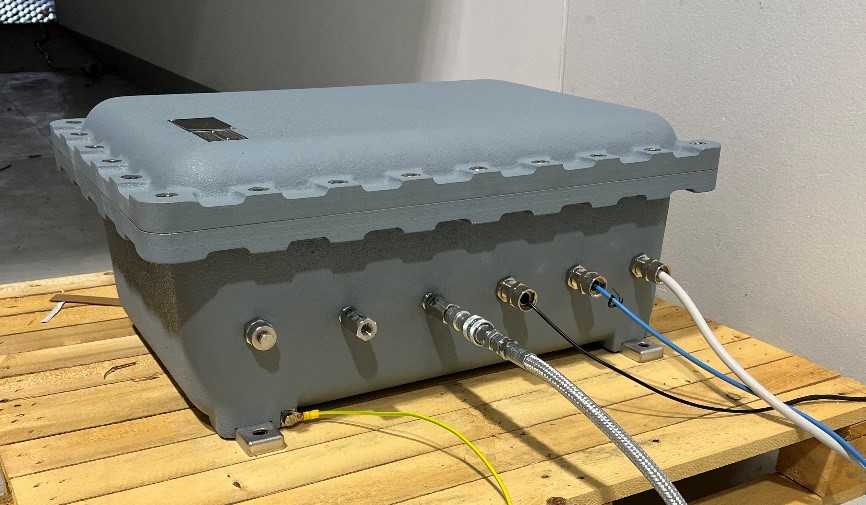
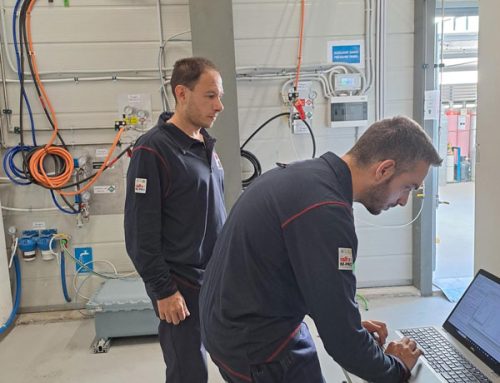
AUTOMA sensor casing and connections
An Innovative Technology Based on Raman Spectroscopy
Detecting hydrogen is not an easy task. Because hydrogen is extremely light and difficult to identify using conventional sensors, HYDRA relies on a technology called Raman spectroscopy.
This technique uses a laser beam to identify gas molecules through a unique spectral “fingerprint” generated by each gas. As a result, the system can:
- Detect hydrogen quickly and reliably.
- Identify multiple gases simultaneously.
- Perform continuous measurements without consumables or special sample preparation.
The system combines a gas sampling unit, an optical module designed to operate safely in potentially explosive environments, and dedicated software that displays real-time measurements and activates alarms whenever predefined safety thresholds are exceeded.
Three Scenarios to Evaluate System Performance
To assess the monitoring tool, several representative test scenarios were created.
Urban or Congested Environment
Buildings and obstacles were simulated to study how they affect hydrogen dispersion. This scenario represents typical industrial and urban areas where structures can significantly influence the movement of gas clouds.
Tunnel Configuration
A confined environment was recreated to investigate hydrogen behaviour in enclosed or semi-enclosed spaces. Since hydrogen is lighter than air and tends to rise, these environments are particularly important from a safety perspective.
Open and Ventilated Environment
In this configuration, hydrogen was allowed to disperse freely under the influence of airflow. The objective was to evaluate the system’s ability to detect very low and fluctuating hydrogen concentrations.
Additional tests were also performed using a mixture composed of 10% hydrogen and 90% methane, a combination that is highly relevant for future energy networks where hydrogen may be blended with natural gas.
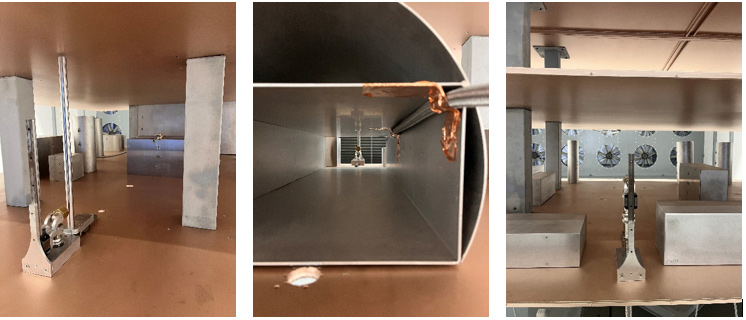
Different configurations for sensor testing: Urban, Tunnel and High Atmosphere
Key Results
The tests confirmed that hydrogen behaviour is strongly influenced by the surrounding environment.
In urban scenarios, obstacles and weather conditions significantly affected the distribution of the gas cloud. In tunnel configurations, accumulation zones were observed, highlighting the importance of carefully selecting monitoring locations.
In open environments, the monitored concentrations were much lower, demonstrating the challenge of detecting a gas that disperses rapidly in well-ventilated conditions.
One particularly important outcome came from the hydrogen-methane mixture tests. The monitoring system successfully identified both gases at the same time, demonstrating the potential of the technology for future energy applications involving blended gas networks.
Next Steps
The results represent an important step towards the use of hydrogen monitoring systems in real infrastructures.
In the coming months, HYDRA will continue validating the technology under increasingly realistic operating conditions. At the same time, AUTOMA will further optimize the system, enhance data analysis capabilities and continue building datasets that may support future artificial intelligence-based functionalities.
Through the collaboration between technology developers and research partners, HYDRA is helping make hydrogen use safer, more reliable and ready for large-scale deployment.